New Thought is the name historians and practitioners both use for a specific American religious and philosophical movement that took shape across the second half of the 1800s, built around one central conviction: that mind, thought and belief have a real, causal effect on health and circumstance, not just on mood or perception. It’s the direct ancestor of nearly everything covered on this site. Neville Goddard’s Law of Assumption, the Law of Attraction popularized by The Secret, affirmations, visualization practice, all of it descends from this specific tradition, even when a given teacher never uses the words “New Thought” at all.
This article stays focused on the movement itself: what it actually taught, how it organized, and who was part of it. For the fuller chronological story, including the mental-healing experiments that came before New Thought had a name and the social-media manifestation culture that came long after, see History of Manifestation.
Core beliefs
New Thought was never governed by a single creed, which makes generalizing about it a little risky. That said, the International New Thought Alliance’s Declaration of Principles, adopted by the umbrella organization most branches of the movement eventually joined, is a reasonable summary of the common ground:
- Mind, described variously as God, Infinite Intelligence or Spirit, is treated as the fundamental reality, with everything else, including the physical body and physical circumstance, understood as an expression of it.
- Every person is understood to carry this same creative capacity, not as a special gift given to a select few.
- Constructive, deliberately directed thought is held to be capable of producing health, prosperity and general wellbeing, and fearful or destructive thought is held to work against those same things.
- Prayer and affirmation are treated less as requests made to an external authority and more as a way of aligning one’s own thinking with a deeper truth already present.
- The movement has generally valued individual freedom of belief over doctrinal conformity, which is part of why it splintered into so many independent branches instead of consolidating into one church.
That last point is worth sitting with, because it’s the clearest structural difference between New Thought and its closest relative.
New Thought and Christian Science: related, not identical
Both traditions trace back to the mental-healing work of Phineas Quimby in the mid-1800s, and both hold that mind has real causal power over the body. Where they differ is structure and theology. Christian Science, founded by Mary Baker Eddy, consolidated into a single denomination governed by one authoritative text, Science and Health with Key to the Scriptures, and has historically discouraged medical treatment in ways most New Thought branches do not. New Thought never consolidated. It stayed, and remains, a loose family of independent churches, authors and teachers, some explicitly Christian in language, some not, agreeing on general principles while disagreeing on plenty of specifics. If you’re trying to categorize a given teacher or book, “New Thought” describes a shared current of ideas, not membership in an organization.
How the movement organized
Despite its resistance to centralizing, New Thought did produce real institutions, several of which are still active today.
Unity, founded in Kansas City in 1889 by Charles and Myrtle Fillmore, is probably the most enduring. It publishes Daily Word, a devotional periodical that has run continuously for decades, and it still operates Silent Unity, a round-the-clock prayer ministry the Fillmores started in 1890.
Divine Science is the organization Joseph Murphy was ordained through before he built one of the largest New Thought congregations in the country in Los Angeles, starting in 1949.
Religious Science, also known by the name of its foundational text, Science of Mind, was founded by Ernest Holmes with his 1926 book of the same name. Holmes had been shaped heavily by reading Ralph Waldo Emerson and by Mary Baker Eddy’s Science and Health, and after moving to Los Angeles in 1912 he discovered the city’s Metaphysical Library, then a real hub of New Thought literature. His organization now operates as Centers for Spiritual Living.
The International New Thought Alliance, formed in 1914 out of earlier regional groups dating back to an 1895 Boston club, functions as an umbrella body rather than a denomination, a loose federation meant to connect independent New Thought churches and individuals rather than govern them.
None of these organizations became household names the way some other American religious movements did. Their influence mostly traveled through the books their members wrote, which reached, and still reach, a far wider audience than the churches themselves.
The writers most associated with the movement
Several of the individual teachers covered elsewhere on this site sit squarely within, or close to, the New Thought tradition. Some were ordained ministers within one of the organizations above. Others worked entirely independently.
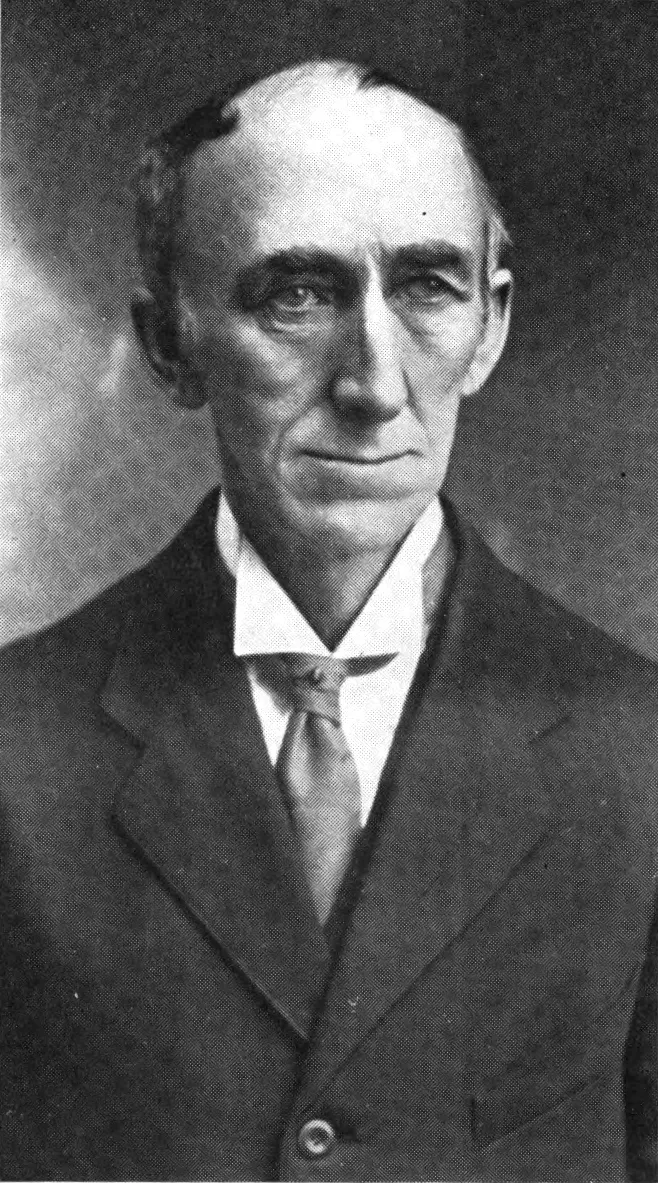
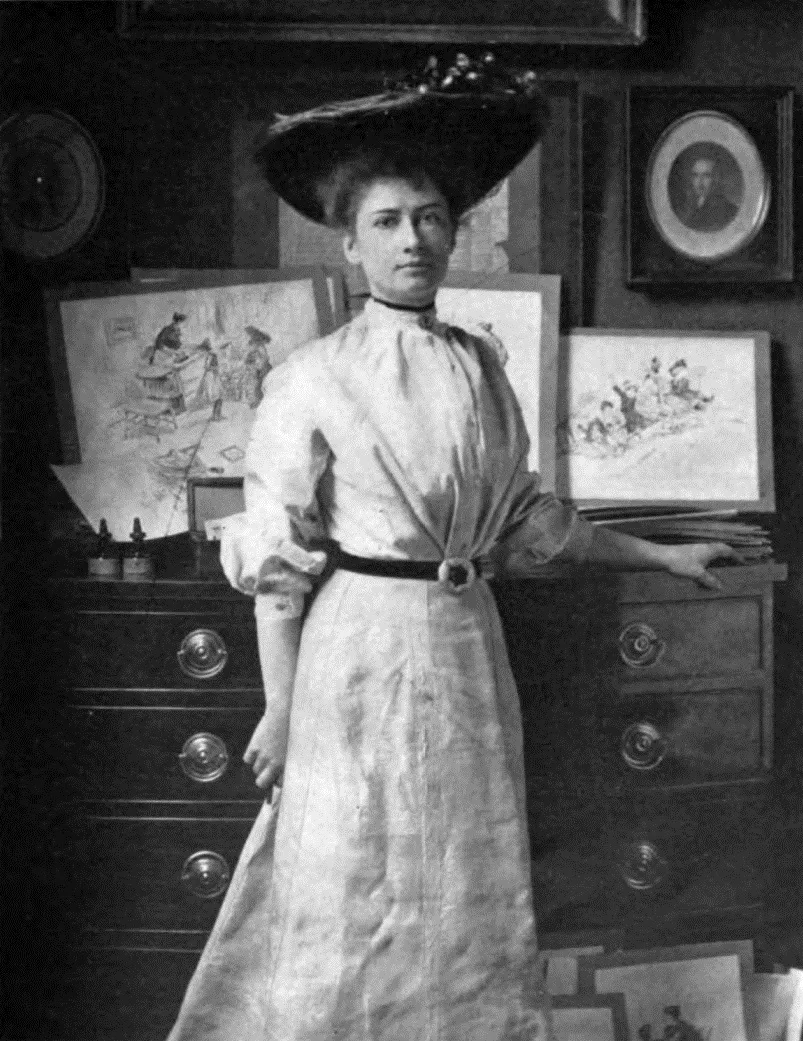
Wallace D. Wattles wrote The Science of Getting Rich (1910), explicitly built on New Thought principles about mind and creation, and it’s the book Rhonda Byrne has said directly inspired The Secret nearly a century later. James Allen, writing in Britain rather than the United States, published As a Man Thinketh (1903), one of the most reprinted texts to come out of this current, even though Allen worked mostly outside any formal New Thought organization. Florence Scovel Shinn came to the movement later in life after a career as an illustrator, and her 1925 book The Game of Life and How to Play It emphasized the creative power of spoken words specifically, an emphasis that later influenced Louise Hay directly.
Joseph Murphy and Neville Goddard represent two different relationships to the movement’s institutions. Murphy was an ordained New Thought minister who spent nearly three decades leading a Los Angeles congregation. Goddard, by contrast, never organized a church or led a congregation. He’s usually placed within New Thought because of where his ideas clearly came from, but he worked as an independent lecturer, and his specific Law of Assumption framework, covered on his teacher profile, was his own development rather than an official movement teaching.
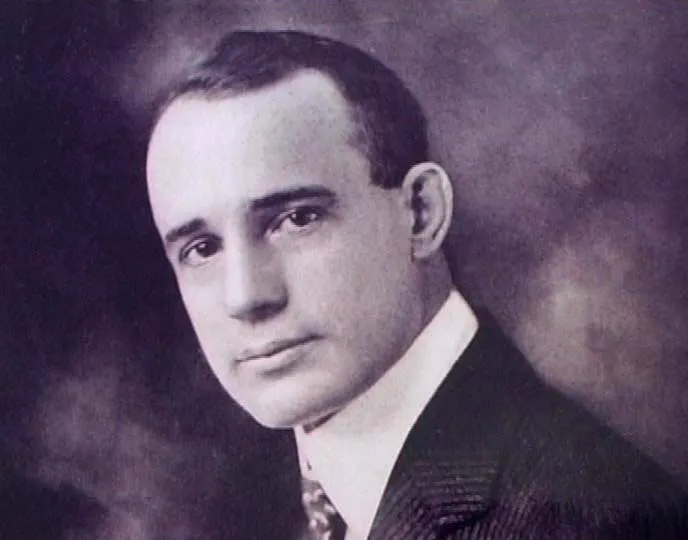
Napoleon Hill sits at the edge of the category. Think and Grow Rich (1937) shares New Thought’s basic conviction that thought shapes outcome, but Hill framed almost everything around business achievement and persistence, which places the book at least as much within the separate tradition of American success literature as within New Thought proper.
Later figures carried the tradition’s ideas into new, more secular-facing forms without necessarily identifying as New Thought teachers themselves. Louise Hay trained directly within Ernest Holmes’s Religious Science church in the 1970s before writing You Can Heal Your Life (1984). Esther Hicks, who began presenting the Abraham-Hicks material in the mid-1980s, works through a channeling framework that sits somewhat apart from the movement’s church-based branches, while still teaching a recognizable version of its core claims about thought and attraction. Wayne Dyer started out in secular, psychology-based self-help before his work moved toward openly New-Thought-adjacent spirituality over time. Rhonda Byrne, whose The Secret (2006) is the reason most people have heard any of these ideas at all, isn’t a New Thought teacher or organizer in the traditional sense so much as the person who repackaged Wattles’s century-old material for a mass 21st-century audience.
Is New Thought still around?
Yes, in a fairly literal sense. Unity, Divine Science, Centers for Spiritual Living and the International New Thought Alliance are all still operating, with active congregations, publications and websites. What’s changed is scale and visibility. In the movement’s early decades, these churches and their books were most of what existed. Today they’re a small, mostly overlooked piece of a much larger, largely secular manifestation and Law of Attraction culture that draws on the same ideas without any organizational connection to them at all. Someone posting a manifestation script on social media almost certainly has no idea Unity’s Silent Unity prayer ministry has been running continuously since 1890, even though the underlying assumption, that focused, believing thought does something real, is the same one.