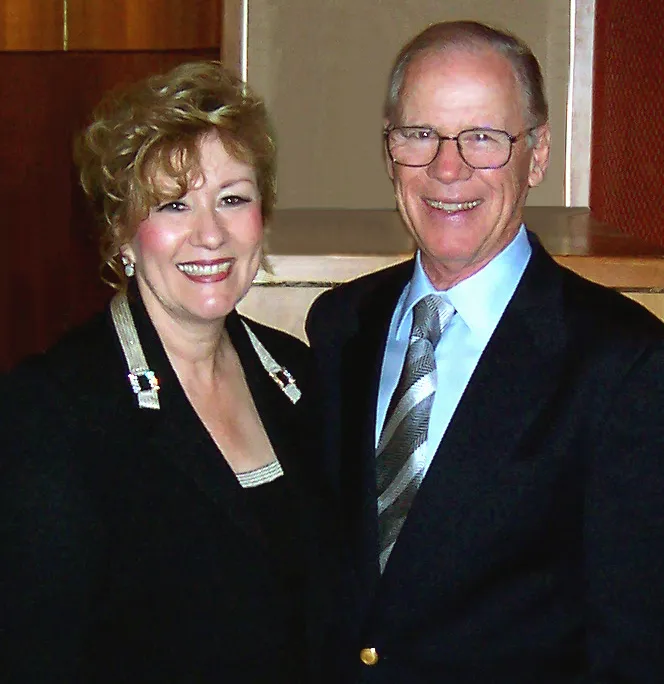
More than any single figure covered on this site, Rhonda Byrne is responsible for how the phrase “Law of Attraction” is actually used in everyday, mainstream conversation today. She isn’t the originator of the ideas in The Secret. She is, by her own account and by the book’s own credited sources, someone who discovered an old idea in a moment of personal crisis and packaged it for a scale of audience nobody working in New Thought had ever reached before.
From television producer to a personal crisis
Rhonda Byrne, born Rhonda Izon on March 12, 1951, in Melbourne, Australia, spent most of her career before 2006 in radio and television production. In 1994 she co-founded a production company, Prime Time Productions, and worked as an executive producer on a range of Australian television projects through the following decade, including Oz Encounters: UFOs in Australia (1997) and The World’s Greatest Commercials (1995–2004).
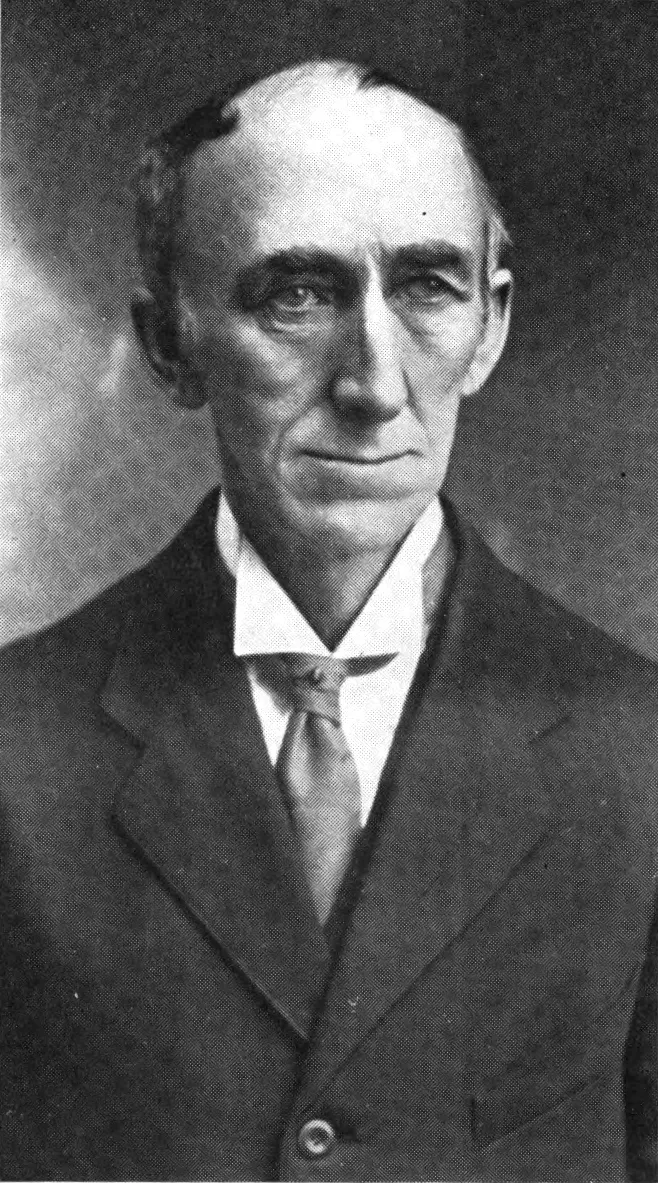
In 2004, following the death of her father and a period of significant personal and professional strain, Byrne’s daughter, Hayley, gave her a copy of Wallace D. Wattles’ 1910 book The Science of Getting Rich. Byrne has described that book as the direct spark for what became The Secret, and Wattles remains the single most consistently credited influence behind the project.
Turning a personal discovery into a global media property
From that starting point, Byrne read further into New Thought and Law of Attraction material and assembled interviews with dozens of contemporary motivational speakers, authors and teachers for a documentary film. The Secret was released in March 2006, followed by the companion book that November, published by Atria Books.
Both were an unusually fast and large commercial success. Within about a year the book had sold in the tens of millions of copies across dozens of languages, and by 2009 the combined book and film were widely reported to have generated around $300 million in revenue. Oprah Winfrey featured Byrne and The Secret across multiple episodes of her show in 2007, a boost widely credited with driving a large share of the book’s early sales, and Byrne was named to TIME magazine’s list of the world’s most influential people that same year.
A three-part process built on much older ideas
The Secret’s central claim is that thought and feeling function like a kind of magnetic force: focusing attention and feeling on something as though it’s already true tends to draw matching circumstances into a person’s life, and the reverse holds for sustained negative focus. The process is commonly summarized, though not as a direct quotation from the book, as three steps: deciding clearly what you want, holding the feeling of already having it, and staying open to receiving it. Gratitude for what’s already present is taught as reinforcing that same signal, an idea that runs through New Thought writing going back well before Byrne, including Wallace D. Wattles’ own 1910 text.
One of the film’s featured teachers, entrepreneur John Assaraf, told a widely circulated personal story about discovering, years later, that a house he’d bought was pictured on an old vision board he’d since forgotten about. That account became one of the more famous illustrations associated with the film and did a great deal to popularize vision boards as a mainstream practice. This is a personal anecdote recounted in the film, not independently verified evidence that the board caused the outcome.
A popularizer more than an originator
Byrne herself has been consistent that The Secret didn’t originate the ideas it presents. Wattles is the credited spark, and the original film also drew on material connected to Esther Hicks and Abraham-Hicks teaching, alongside a large cast of contemporary motivational speakers and authors. Taken together, The Secret is best understood as a synthesis and repackaging of decades-old New Thought and Law of Attraction ideas for a mass 2000s audience, not as a new body of teaching.
Its real innovation was in format and reach: pairing a slickly produced documentary with a short, highly accessible book, and treating “Law of Attraction” as a single, marketable, teachable idea rather than one strand within a much older and more varied tradition. That framing is, more than any of the texts it drew on, what shaped how the term is used in mainstream culture today.
Reception and criticism
The Secret’s commercial and cultural reach is not in dispute. Its scientific claims are. Physicists and science writers, including Harvard physicist Lisa Randall, along with organizations like the Center for Inquiry, have publicly challenged the book’s occasional framing of its claims in the language of quantum physics, arguing that framing has no real scientific grounding. Critics have also raised a more serious concern: taken literally, the book’s logic can imply that illness or hardship reflects a person’s own thinking, a reading some commentators argue risks blaming people facing serious illness or misfortune for their own circumstances. That is a criticism of the book’s framing, not an endorsement of it, and it lines up with a broader caution that applies throughout this site: no one should treat manifestation teaching, Byrne’s or anyone else’s, as a guarantee of a specific health, financial or relationship outcome.
Byrne has continued writing in the same territory since, including The Power (2010), The Magic (2012), Hero (2013) and The Greatest Secret (2020), with further titles announced in the years since, evidence of a sustained career built on the framework she introduced in 2006 rather than a single one-off hit.