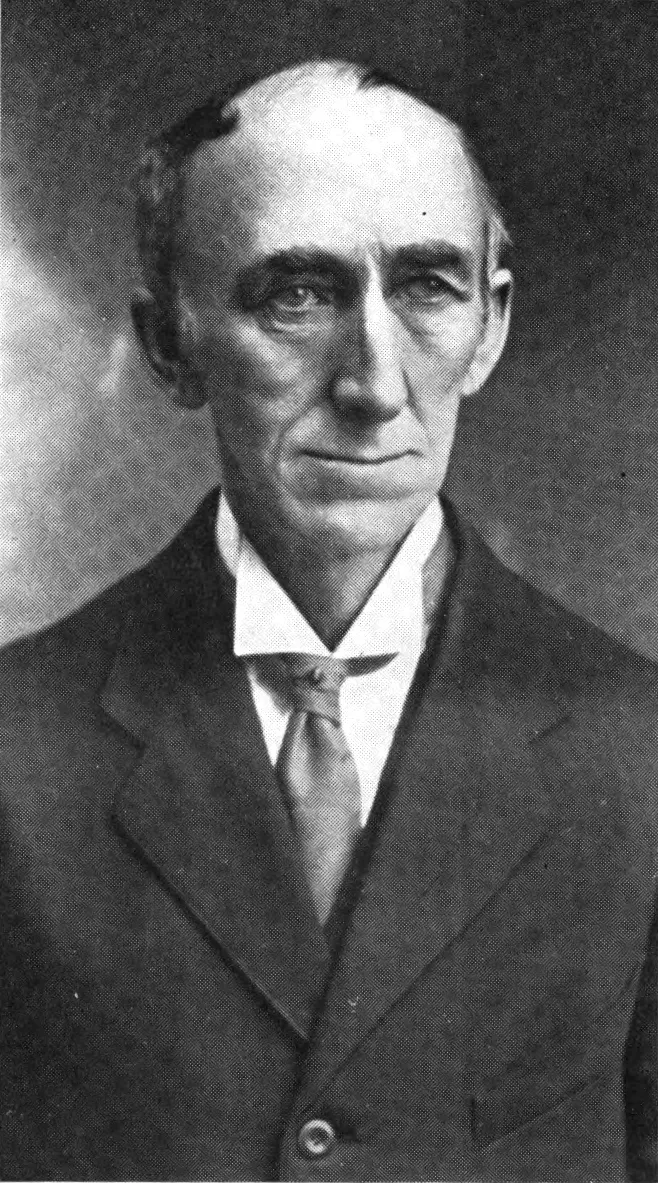
Wallace D. Wattles died largely obscure, having spent most of his life as a struggling writer with little formal education and no real financial success of his own. Yet his short 1910 book on the psychology of wealth outlived him by more than a century, and became, almost a hundred years after it was written, the specific text credited with inspiring the best-selling self-help phenomenon of the 2000s.
A hard early life
Wattles was born in Illinois in 1860, though the exact date isn’t established in the sources available for this profile. He grew up in a farming family in Nunda Township, McHenry County, working as a farm laborer with minimal formal schooling. He married Abbie Bryant, and the couple had three children, including a daughter, Florence, who later wrote about her father’s life and became politically active in her own right.
According to his daughter’s account, Wattles was raised Methodist but was expelled from the church over doctrinal disagreements he considered unjust, an experience that pushed him toward independent, self-directed study of philosophy and religion rather than any organized denomination.
Christian Socialism and years of self-study
In 1896, Wattles attended a gathering in Chicago where he met George D. Herron, a Congregationalist minister known for preaching a Christian Socialist message. That encounter shaped a conviction Wattles held for the rest of his life: that socialist economic principles and a New Thought-style belief in the causal power of thought weren’t in conflict, but part of the same underlying picture. He ran twice, unsuccessfully, for public office in Indiana as a Socialist Party candidate, for the U.S. House of Representatives in 1908 and for county prosecuting attorney in 1910.
Across roughly a decade, he studied philosophers including Hegel and Emerson and worked out his own synthesis of their ideas. His daughter later wrote that he deliberately tested his conclusions on himself before publishing them, describing how he formed a clear mental picture of the writer he wanted to become and worked steadily toward it. That account comes from his daughter’s own recollection, not from an independent record, and is best read as a personal, secondhand account of his process rather than a verified biographical fact.
The Science of Getting Rich and its “certain way”
The Science of Getting Rich was published in 1910 by the Elizabeth Towne Company, structured as seventeen short, direct chapters. Its central claim is that wealth isn’t obtained by competing with others for a fixed pool of resources, but by thinking and acting in what Wattles called a “certain way,” aligned with a formless, intelligent substance he believed underlies all matter and responds to a clear mental picture held with gratitude and followed by purposeful, present-moment action.
He was explicit that this was meant to operate on what he called a creative plane rather than a competitive one, a distinction he treated as the whole foundation of the system, and he rejected the idea that one person’s financial gain has to come at another’s expense. That’s presented here as Wattles’ own framework and personal conviction, not as an established or tested economic principle.
The same year, he published a companion volume, The Science of Being Well, applying the same reasoning to physical health. The Science of Being Great followed in 1911, extending it to personal character and achievement, and was published around the time of his death. Earlier works trace the same synthesis forming: Jesus, the Man and His Work (1905) reflects his Christian Socialist reading of scripture, and Making the Man Who Can (1909) previews the self-development themes that would define his later trilogy.
Death and a long afterlife in other people’s books
In poor health during his final years, Wattles and his wife traveled to Ruskin, Tennessee, hoping the climate might help him recover. Instead he suffered a relapse and died there on February 7, 1911, at the age of 51. He was buried in Elwood, Indiana, where, according to reports at the time, local businesses closed for two hours during his funeral out of respect.
Wattles remained a relatively minor figure for decades after his death. The Science of Getting Rich re-entered wide circulation once it fell into the public domain, and gained a substantial new audience after Rhonda Byrne credited it directly as the book that led her to create The Secret in 2006, introducing Wattles’ vocabulary of mental pictures, gratitude and the “certain way” to a mass twenty-first-century audience under new branding, nearly a century after he wrote it.
His trilogy is also widely discussed as a direct forerunner of Napoleon Hill’s Think and Grow Rich (1937), which arrived almost three decades later and covers similar ground, visualization, definiteness of purpose, autosuggestion, in a more secular, achievement-oriented voice. He’s frequently grouped alongside James Allen, whose short 1902 book As a Man Thinketh is the other foundational text most often paired with Wattles’ own as an early, compact statement of the idea that sustained thought is the primary cause of outward circumstance.