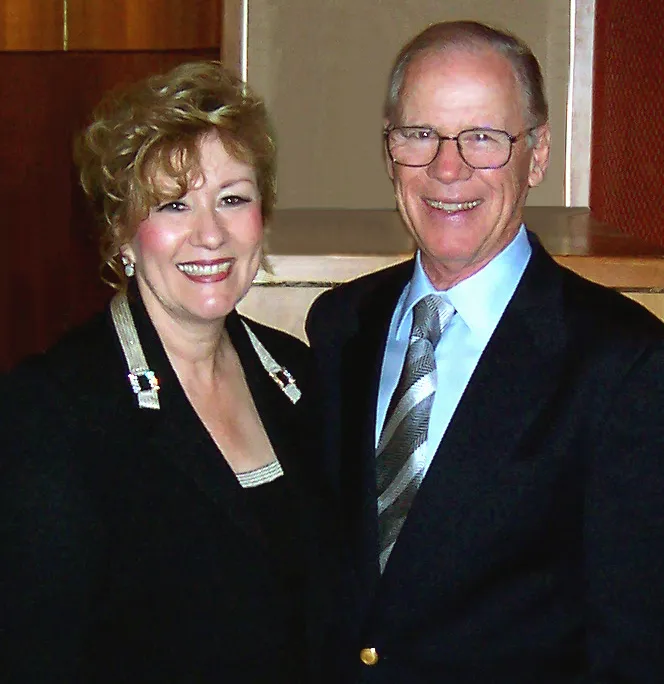
Esther Hicks is best known not for a philosophy she describes as her own, but for material she presents as spoken through her by a source she and her late husband, Jerry Hicks, called Abraham. Whatever a reader makes of that claim, its practical effect on the modern Law of Attraction movement is well documented: Hicks was the most prominent teacher in the original 2006 version of the film The Secret, and the two are directly, publicly connected.
Background and the beginning of the channeling
Esther Hicks was born in 1948 in Coalville, Utah. She met Jerry Hicks, a former circus acrobat turned motivational speaker and publisher, in 1976, and the two married in 1980. By the couple’s own account, Jerry, who had a long-standing interest in unusual mental and spiritual phenomena, encouraged Esther to explore meditation and the work of Jane Roberts, a well-known channeler of a personality called Seth. Esther Hicks has said she began channeling a distinct voice she and Jerry came to call Abraham in 1985.
Jerry Hicks died in November 2011, at eighty-five, after an illness. Esther has continued the workshops and publishing under the Abraham-Hicks name since his death, presenting live sessions in cities across the country much as the two of them did together for decades.
What “Abraham” is said to be
How this is presented
Esther Hicks and her publishers describe Abraham as a group, non-physical consciousness that speaks through her, rather than as Esther Hicks’s own personal opinions. When delivering this material in workshops and recordings, she is described as shifting her voice and manner to indicate that Abraham, not Esther, is speaking. This is a claim of channeled spiritual communication. It’s presented here as exactly that, a claim, neither endorsed as literal fact nor dismissed as fraud, in keeping with how Hicks and her publisher themselves frame it.
The content of the Abraham material is a version of the Law of Attraction, focused heavily on emotion as a navigation tool. A recurring device is what’s usually called the Emotional Guidance Scale, a list of roughly twenty-two named emotional states running from joy, appreciation and enthusiasm at the top, down through boredom, frustration and worry in the middle, to grief, fear and powerlessness at the bottom. The teaching holds that a person can’t leap from the bottom of the scale to the top in one step, but can deliberately reach for a slightly better-feeling thought and climb it gradually. A related term, “the Vortex,” describes a state of close alignment with one’s own desires, in which wanted outcomes are said to arrive with much less effort or struggle.
Books and the connection to The Secret
Hicks, writing with Jerry, published more than a dozen Abraham-Hicks books from the late 1980s onward, most of them through Hay House, the publisher Louise Hay founded. Ask and It Is Given: Learning to Manifest Your Desires (2004) and The Law of Attraction: The Basics of the Teachings of Abraham (2006) are generally treated as the core introductory texts; later titles, including Money, and the Law of Attraction (2008) and The Vortex (2009), apply the same framework to specific areas of life.
Hicks’s most visible connection to the wider popularization of the Law of Attraction is her role in Rhonda Byrne’s The Secret. She appeared as the most prominent of the film’s roughly two dozen interviewed teachers in its original 2006 release, filmed aboard a cruise, and was reportedly the only contributor paid for participation, receiving 10 percent of sales, said to have amounted to roughly $500,000. After a contract dispute with Byrne, reportedly centered on rights to distribute the film online, Hicks’s segments were pulled from the later “Extended Edition” and replaced with additional material from other teachers. Hicks subsequently released her own DVD addressing the material originally cut from the film. Whatever the dispute over credit and payment, her direct, documented involvement in The Secret’s original production makes her one of the clearest links between the Abraham material and the Law of Attraction’s mainstream popularization in the 2000s.
Where this fits
Because the core of her work is presented as channeled rather than authored, Hicks sits a little apart from teachers like Neville Goddard or Napoleon Hill, whose ideas are attributed entirely to their own thinking and life experience. But the content of the Abraham material, that focused thought and feeling shape reality, that emotion is a reliable guide to alignment, that deliberate appreciation improves what shows up in a person’s life, sits squarely inside the same broad Law of Attraction tradition covered throughout this site, whatever a reader concludes about its source.