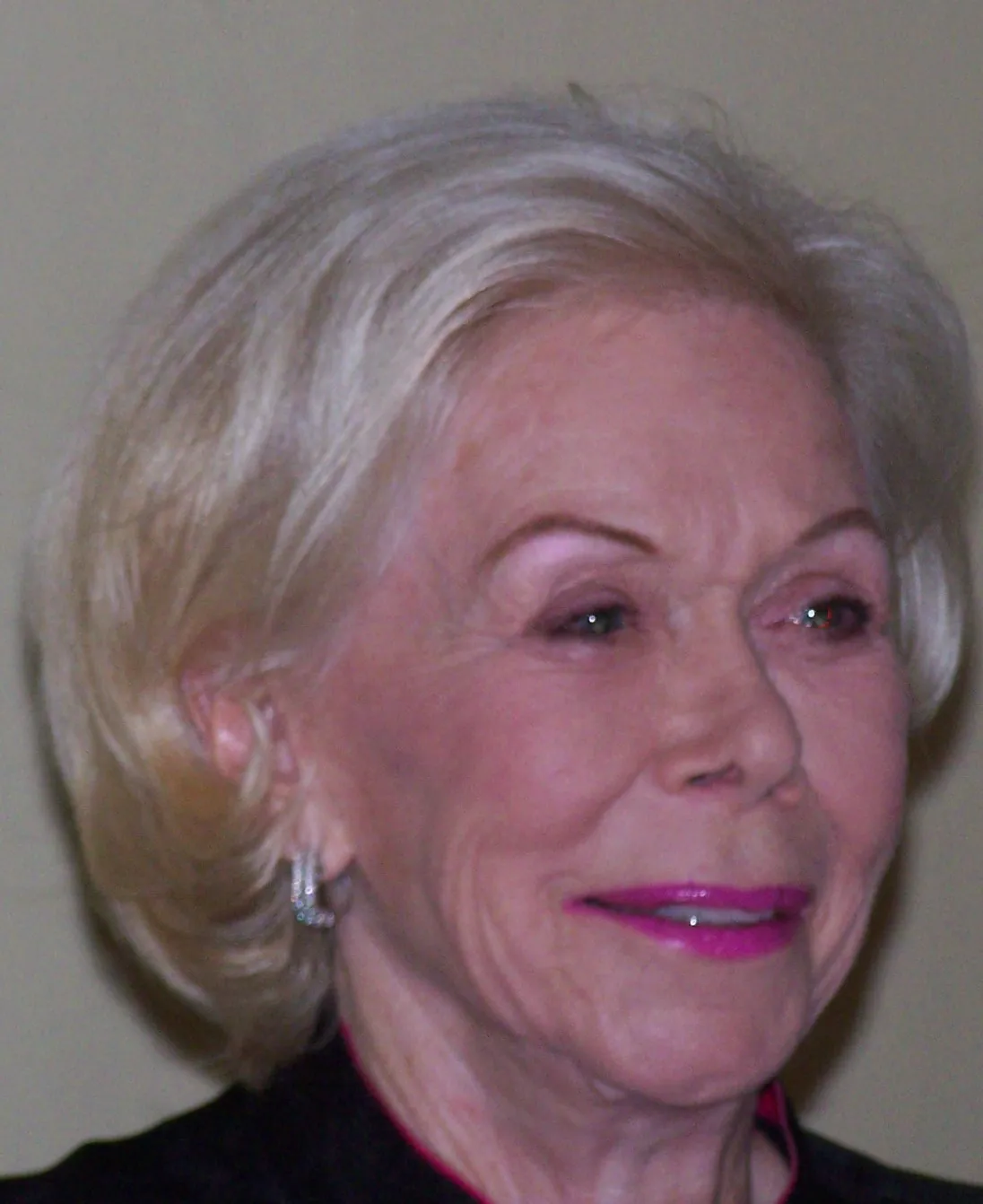
Louise Hay spent her first fifty years largely outside the public eye and the last forty as one of the most widely read self-help authors in the world. Her 1984 book You Can Heal Your Life has sold more than fifty million copies, and the publishing company she started to put it into print, Hay House, grew into one of the largest mind-body-spirit publishers anywhere before its 2023 acquisition by Penguin Random House.
A difficult early life
Louise Hay was born Helen Vera Lunney on October 8, 1926, in Los Angeles, and died on August 30, 2017, in San Diego, at ninety. Her childhood was marked by poverty and violence: her mother remarried a man Hay later described as physically abusive, and Hay said she was sexually assaulted by a neighbor at around age five. She left high school at fifteen after becoming pregnant, gave birth at sixteen, and placed the child for adoption. She later worked as a fashion model in New York before her life took a very different direction in the 1970s, when she began attending, and eventually became a licensed practitioner and workshop leader at, a Church of Religious Science, one of the New Thought-descended denominations built on the idea that mind and belief shape experience.
From Heal Your Body to You Can Heal Your Life
Hay self-published a short reference booklet, Heal Your Body, in 1976, pairing physical ailments with what she called their probable emotional causes and a suggested affirmation for each. She said that around 1977 or 1978 she was diagnosed with cancer, accounts of the exact diagnosis vary somewhat in the retelling, declined conventional treatment, and worked instead through forgiveness practice, nutritional changes and related therapies, later describing herself as cancer-free. No medical records from that period have surfaced, and by her own account the doctor involved had since died, so the story exists only as Hay’s own telling of it, not as an independently documented case.
That story became the emotional center of You Can Heal Your Life, published in 1984, which expanded the ailment-and-affirmation format of Heal Your Body into a full book connecting specific recurring thought patterns and childhood wounds to specific physical and emotional problems. The book made her a bestselling author within a few years and gave her the material to launch Hay House that same year, initially as a way to keep publishing her own work and, soon after, other authors’ as well.
The core claim, and where belief and evidence separate
Hay’s central and most quoted idea is that long-held thought patterns, resentment, a need for control, self-criticism, are the deeper cause of specific physical illness, and that changing the thought pattern, through forgiveness, affirmation and self-love, can help resolve the physical condition. Her books built this into a systematic reference: an ailment on one side, a “probable cause” and a corresponding affirmation on the other.
Medical and scientific context
Mainstream medicine recognizes that stress and emotional state can influence overall health in general, well-studied ways. It does not support Hay’s more specific claim, that a particular emotional pattern causes a particular disease, and that changing the thought pattern can be relied on to cure it. That specific causal claim is a belief central to her teaching, not an evidence-based medical finding, and no mainstream clinical body treats it as established fact.
That distinction wasn’t just academic for the people who took her most literally. Hay’s earliest wide following came through her work with AIDS patients in Los Angeles in the 1980s, at the height of the epidemic and at a time when the disease carried enormous stigma and many patients had been abandoned by their own families. Her support groups offered real community and a measure of dignity that was, by multiple accounts, in short supply elsewhere at the time.
Worth keeping in mind
That same period is also the basis of the most serious criticism of Hay’s work. Journalists and public health writers have pointed out that across her decades of involvement with AIDS patients, no documented case exists of her approach curing or reversing the disease, and that Hay is on record, including in a documentary about her AIDS work, expressing skepticism toward medical prognoses. Critics argue that framing a life-threatening illness as self-caused placed an unfair burden of blame on people who were already extremely vulnerable.
Influence
None of that erased her popularity. You Can Heal Your Life remained continuously in print, and Hay went on to write more than thirty books, including The Power Is Within You (1991) and Mirror Work: 21 Days to Heal Your Life, built around her signature practice of speaking affirmations aloud while looking into a mirror. Hay House itself outlived her, becoming a central publisher for later mind-body-spirit and manifestation-adjacent authors, Esther Hicks among them. Whatever the scientific standing of her central claim, her basic format, pairing self-love and affirmation practice with a hopeful, structured explanation for suffering, shaped how a large amount of later wellness and manifestation writing is packaged and sold.