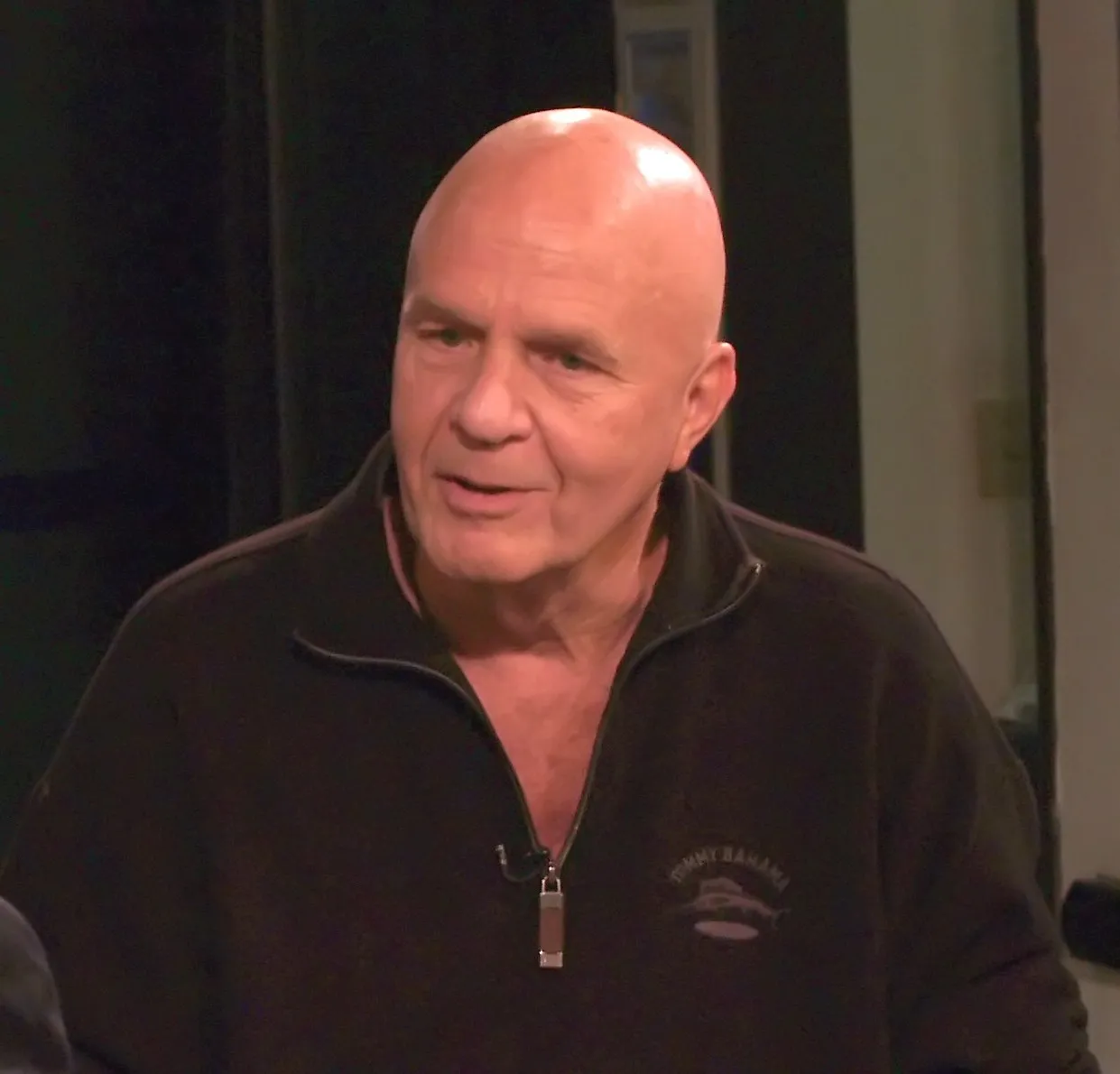
Wayne Dyer is one of the few figures on this site whose career can be traced almost entirely through mainstream psychology credentials rather than through New Thought ministry or independent metaphysical lecturing. He held a doctorate in counseling, taught at a university, and ran a private therapy practice years before he wrote a word of what would eventually become explicitly spiritual, intention-focused material. That trajectory, from clinical psychology to something much closer to the manifestation writing on this site, is a large part of what makes him a distinct figure within it.
A childhood in Detroit’s foster system
Wayne Walter Dyer was born on May 10, 1940, in Detroit, Michigan. His father left the family early, and his mother, Hazel, unable to support three young boys alone while working, placed Dyer and his brothers in a series of orphanages and foster homes around the Detroit area for much of the 1940s. The family wasn’t reunited under one roof until around 1949, after Hazel remarried.
Dyer attended Detroit public schools, reportedly reading hundreds of books by the time he finished high school, and was drawn early to the writing of Ralph Waldo Emerson and Henry David Thoreau, an influence that stayed with him for the rest of his career. After graduating in 1958, he joined the U.S. Navy, trained as a radioman and cryptographer, served a tour in Guam, and was discharged in 1962.
From guidance counselor to bestselling author
Dyer earned a bachelor’s degree in history and philosophy, a master’s in psychology, and an Ed.D. in counselor education from Wayne State University in 1970. He worked first as a high school guidance counselor in Detroit, then as a professor of counselor education at St. John’s University in New York City, alongside a private therapy practice.
His public lectures on shedding self-limiting thought patterns caught the attention of literary agent Arthur Pine, who encouraged him to turn the material into a book. The result, Your Erroneous Zones (1976), became one of the best-selling books of its era and launched Dyer into a full-time writing and speaking career. He went on to become one of American public television’s most successful pledge-drive personalities, recording ten specials that are credited with raising more than $200 million for PBS stations over the following decades, a fundraising track record almost without parallel in the self-help genre.
From “erroneous zones” to “the power of intention”
Dyer’s early books read closer to applied psychology than to spirituality. Your Erroneous Zones (1976) and Pulling Your Own Strings (1978) frame guilt, anxiety and an excessive need for approval as learned habits, addressed with the vocabulary of counseling and self-examination rather than metaphysics.
Over the following two decades, his work shifted noticeably toward more explicitly spiritual territory. Manifest Your Destiny (1997), The Power of Intention (2004) and Wishes Fulfilled (2012) describe intention as something closer to a property of a larger creative field, what he sometimes called Source, than as a purely internal act of concentration or willpower. This later framing is Dyer’s own spiritual teaching and personal conviction, not a claim drawn from or supported by clinical psychology, even though his early credentials remain part of what gives his work its distinctive voice.
He described the shift himself as a move from psychology toward spirituality, and leaned increasingly on Eastern and contemplative traditions, alongside Emerson and Thoreau, to make the case that the two weren’t actually in conflict.
Where he sits relative to older New Thought teaching
Unlike Neville Goddard, whose core teaching held steady across three decades of lectures, Dyer’s public work visibly evolved over more than forty years, tracking openly against changes in his own life. His academic background, an earned doctorate and a university faculty position, gave his early books a more clinical, credentialed voice than most New Thought or metaphysical writing of the period, which is a large part of why he’s often described as bridging self-help psychology and spirituality rather than sitting squarely inside either tradition.
Later in his career, Dyer was published primarily by Hay House, the company founded by Louise Hay, placing him in the same publishing and lecture-circuit ecosystem as many of the best-known contemporary manifestation and Law of Attraction teachers, including Esther Hicks, whose Abraham-Hicks material reached a similar, overlapping audience through the same years.
Death and legacy
Dyer died on August 29, 2015, at age 75, in Maui County, Hawaii, of a heart attack, having also been diagnosed with leukemia in the years before his death. His books remain widely read decades after his first bestseller, and he stands as one of the clearest examples of a formally trained psychologist whose later work moved, deliberately and openly, into the same territory of intention and inner alignment that runs through most of the material on this site.