Search around manifestation content for long enough and you’ll run into “Hermetic principles,” most often the phrase “the All is Mind” or the maxim “as above, so below.” These get presented constantly as ancient wisdom, sometimes traced vaguely to “Egyptian mystery schools” or to Hermes Trismegistus himself. The actual source for almost all of this modern usage is a specific, datable book: The Kybalion, published in 1908. Its real history is more interesting, and more recent, than the framing usually lets on.
What the Kybalion actually is
Publication history
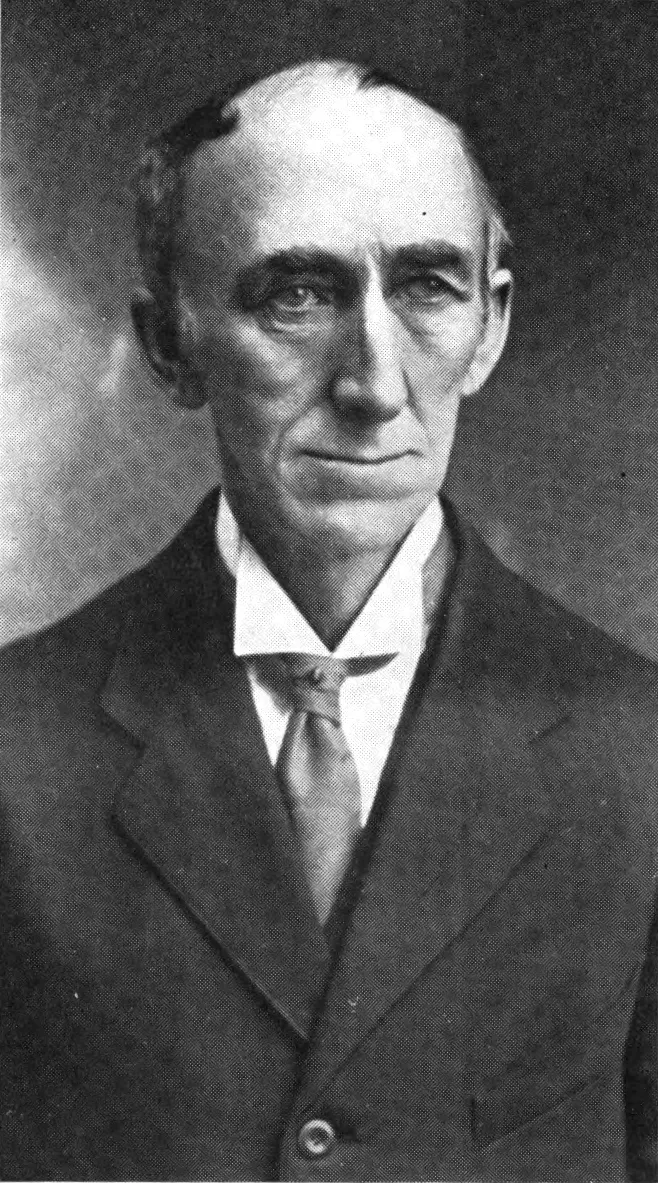
The Kybalion was published in 1908 by the Yogi Publication Society in Chicago, credited to “Three Initiates” who chose to remain anonymous. That anonymity held for decades, but the modern scholarly consensus, reflected in a definitive annotated edition with a scholarly introduction by religious studies researcher Philip Deslippe, now attributes the book’s sole authorship to William Walker Atkinson (1862 to 1932), an American attorney, publisher and prolific New Thought writer known for producing an enormous volume of work, often under multiple pseudonyms.
The book presents itself as a distillation of teachings originating with Hermes Trismegistus, a legendary sage, and frames its content as ancient wisdom being passed down through initiates. Even its title contributes to that impression: “Kybalion” looks like an old Greek word, but it has no established meaning in Greek and appears to have been invented for the book, likely to lend it a sense of antiquity it doesn’t actually have.
This wasn’t a one-off move for Atkinson. Under a different pseudonym, “Yogi Ramacharaka,” he wrote a whole separate series of books, including titles like The Hindu-Yogi Science of Breath and Fourteen Lessons in Yogi Philosophy and Oriental Occultism, presented as authentic Hindu teaching. Atkinson wrote well over a hundred books across his career, frequently under invented identities that implied a source, ancient, Eastern, or initiatory, that the material didn’t actually have. The Kybalion fits a documented pattern in his work rather than standing apart from it.
What scholars actually conclude
Researchers who’ve studied the text closely, including Chapel’s analysis of its relationship to the historical Hermetic tradition, generally conclude that while the Kybalion shares some real traits with older Hermetic writing, philosophical mentalism, the “as above, so below” formula, the idea of paired opposites, it is, as a whole, far more indebted to early 20th-century New Thought thinking, the same movement its author belonged to, than to any continuous transmission of ancient teaching. It’s considered too closely bound up with the specific concerns of its own era to represent the broader historical Hermetic tradition it claims to summarize.
The genuinely ancient material, for contrast
Precision matters here, rather than swinging to the opposite overcorrection of dismissing Hermeticism itself as fake. There is a real, old body of Hermetic writing. The Corpus Hermeticum is a collection of seventeen Greek philosophical and theological texts attributed to Hermes Trismegistus, a syncretic figure combining the Greek god Hermes and the Egyptian god Thoth. Modern scholarship dates their actual composition to Roman Egypt, roughly the 1st through 3rd centuries CE, a genuine amalgam of Platonic, Stoic and Egyptian religious ideas from that period. When these texts resurfaced in Renaissance Europe in the 15th century, readers believed them to be far older, roughly contemporary with Moses. Later scholarship corrected that dating substantially.
So genuine ancient Hermeticism exists, it’s just considerably older, stranger and more philosophically dense than the Kybalion, and the Kybalion is not a translation or direct product of it. It’s a 1908 New Thought text using the Hermetic name.
The Kybalion also didn’t appear in a vacuum. The late 19th and early 20th century United States saw a real surge of interest in occultism, comparative religion and alternative spiritual movements, Theosophy among them, founded in 1875 and itself drawing eclectically on Hindu, Buddhist and Western esoteric sources. Atkinson had his own background studying Theosophical material before writing the Kybalion, and part of what he seems to have done, according to researchers who’ve traced his career, is gather diverse strands of occult and metaphysical teaching circulating at the time and organize them into a tidy, numbered system that reads as more unified and ancient than the source material actually was.
The Principle of Mentalism
The Kybalion organizes its teaching around seven claimed Hermetic principles, and the first, Mentalism, is the one manifestation teachers draw on most. Its central statement, in the book’s own words, is that “THE ALL IS MIND; The Universe is Mental.” The text explains this as meaning that the ultimate substance underlying all apparent material reality, all of what appears to the senses as matter, energy and phenomena, is not itself material, but is better understood as an infinite, living Mind, and that the entire manifest universe exists as a kind of mental creation within that Mind.
Manifestation interpretation
This principle maps onto manifestation teaching’s “thoughts are things” claims about as directly as any idea covered on this site, and the honest version of that connection works differently than it does for genuinely ancient traditions being reinterpreted centuries later. The Kybalion wasn’t written in antiquity and picked up by manifestation teachers afterward. It was written by a New Thought author in the same period, and in overlapping circles, as other early manifestation-adjacent writing. Wallace D. Wattles, whose own work explored a similar idea of an underlying “thinking substance” from which all things are formed, was writing in roughly the same New Thought milieu around the same years. The Kybalion and early manifestation teaching are closer to siblings from the same movement than to an old tradition and its later interpreter.
Neville Goddard, writing a few decades later, made a related but distinct move of his own: rather than framing an impersonal “All” as fundamentally mental, he located that same creative primacy in individual human imagination specifically, describing it as the one true operative power. It’s a variation on the Mentalism theme rather than a direct borrowing from the Kybalion, and there’s no strong evidence tying Goddard’s work directly to Atkinson’s book, but both writers were drawing on the same broader New Thought conviction that mind, not matter, is the fundamental layer of reality.
The other six principles, briefly
The Kybalion presents Mentalism alongside six other claimed principles, and naming them briefly is useful context even though Mentalism is doing the most direct conceptual work for manifestation teaching. Correspondence holds that patterns repeat across different levels of reality, summarized as “as above, so below.” Vibration claims nothing is ever truly still, that everything, including thought, is in constant motion at some rate or frequency. Polarity holds that apparent opposites are really two ends of the same underlying quality, differing in degree rather than kind. Rhythm describes a natural swing or tide to all things, a pendulum movement between poles. Cause and Effect claims nothing happens by pure chance, only by law not yet understood. Gender holds that a masculine and feminine principle operates in everything, not only in biological sex.
Manifestation content borrows from several of these too, particularly Vibration (“raising your vibration”) and Cause and Effect, though usually with even less direct engagement with the original text than the Mentalism principle gets. Each of the seven principles would reward its own closer look; this piece has stayed focused on Mentalism specifically.
Holding this honestly
None of this means engaging with the Kybalion or with Hermetic ideas more broadly is somehow illegitimate. Plenty of real spiritual and philosophical traditions have complicated, reconstructed, or partly invented histories, and that doesn’t automatically make the ideas within them worthless. What matters is not presenting a 1908 Chicago publication as unbroken ancient Egyptian wisdom when the actual documented history is more specific and more recent than that. The Principle of Mentalism is a real, influential idea with a real, traceable author and era. Whether “the All is Mind” is also true in some deeper metaphysical sense is a separate question this article isn’t equipped to answer, but knowing where the claim actually comes from is a reasonable starting point before deciding what to make of it.